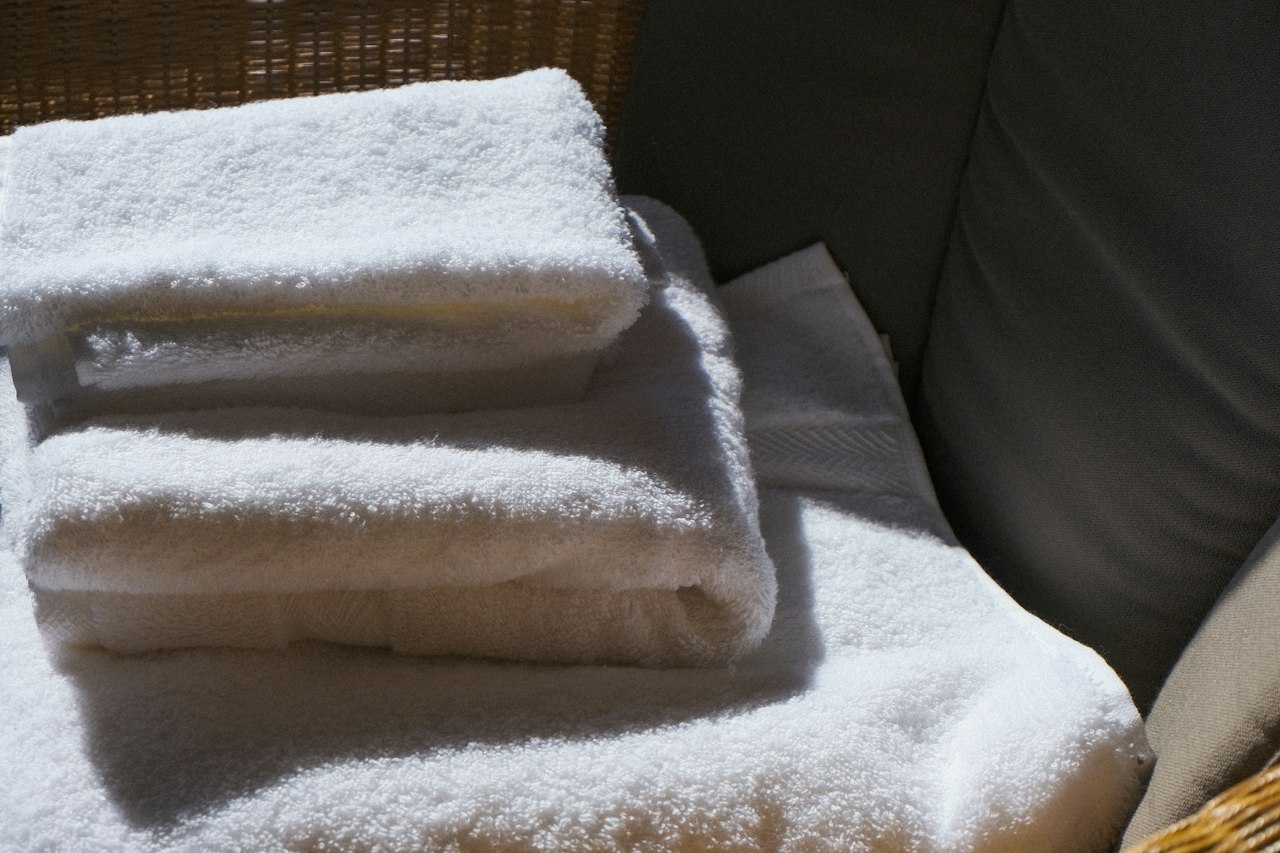
Two white bath towels can sit side by side on a shelf, look almost identical, and differ in price by a factor of four. Most shoppers have bought the cheaper one, felt fine about it for a month, and then watched it turn thin, scratchy and slow to dry. Others have paid a premium and wondered whether they paid for quality or for packaging. The good news is that a towel gives away most of its secrets if you know where to look.
This guide walks through six checks you can do with your hands and eyes. None of them need special tools, and most take under a minute.
1. Read the Weight, Then Feel It
Towel weight is listed as GSM, or grams per square metre. Budget bath towels often sit between 300 and 400 GSM. Mid-range options land around 450 to 500. Well-made premium bath towels usually sit near 600 GSM, which gives a dense, soft hand without becoming so heavy that the towel takes all day to dry.
A number on a label is only a starting point, though. Pick the towel up. A quality towel feels substantial for its size and drapes rather than folding stiffly. If you are comparing options online, the product page should list the GSM clearly. When a brand hides this number, it is often because the number is not flattering.
2. Look Closely at the Loops
Turn the towel toward the light and look at the terry loops. On a good towel they stand evenly, sit close together and spring back when you brush a hand across them. On a weaker towel you will see gaps where the base weave shows through, loops of uneven height, or loops that already look flattened.
Dense, even loops matter because they do the actual work. Each loop is a small sponge. More loops packed closely together means more surface to pull water off your skin, and a softer feel when you wrap up after a shower. If you want a sense of what this looks like in practice, browse a range of well-made bath towels and compare the close-up photos with what you see in a discount bin.
3. Ask What the Cotton Is
"100% cotton" tells you very little. Cotton fibres vary a great deal in length, and length is what decides how a towel ages. Long-staple cotton has longer individual fibres, which can be spun into smoother, stronger yarn. Short-staple cotton has more loose ends, so it sheds lint and pills sooner.
Combed cotton goes one step further. The fibres are brushed before spinning to remove the shortest strands, which leaves a cleaner, more durable yarn. A label that names long-staple or combed cotton is a good sign. A label that says only "cotton" leaves you guessing.
4. Check the Edges and the Hem
The hem is where cheap towels fail first. Look for tight, even stitching with no loose threads at the corners. A woven border, sometimes called a dobby band, should lie flat rather than puckering. Give the edge a gentle tug. If the stitching already stretches or the corners look thin, the towel will fray after a few dozen washes.
Finishing work is easy to skip in a factory and hard to fake. It is one of the most honest signals of how much care went into the whole piece.
5. Look for Independent Testing
A towel sits against your skin every day, so it is worth knowing what is in it. The OEKO-TEX Standard 100 label means the finished textile has been tested by an independent lab for a long list of harmful substances. It does not tell you how soft or durable the towel is, but it does tell you the dyes and finishes have been checked.
Be careful with vague green claims. Words like "eco" or "natural" on their own carry no legal weight. Specific, named certifications are what you want to see.
6. Wash It Before You Judge It
Many towels are sold with a softening finish that makes them feel lovely in the store and then washes out. That finish can also make a new towel feel water-resistant. Wash any new towel once or twice, without fabric softener, before you decide how it performs.
A well-made towel often gets better after a few washes as the fibres open up. A poorly made one shows its true character fast: it goes flat, sheds lint, or feels rough once the coating is gone.
Where the Extra Money Actually Goes
When you pay more for a towel, you should be paying for four things: better fibre, denser weaving, careful finishing and honest testing. You should not be paying only for a logo or a heavy gift box.
Where a towel is made also tells you something. Portugal has a long terry weaving tradition, and many respected towel makers rely on its mills. Everlayer®, for example, is a Canadian-founded brand that designs in Winnipeg and has its 600 GSM combed cotton towels woven in Portugal, with OEKO-TEX testing on the finished product. That kind of transparency about origin and spec is what you want from any brand asking for a premium.
Some premium towels are heavier, at 700 or 800 GSM. Heavier is not automatically better. A very dense towel can take much longer to dry, which matters in a humid bathroom. Around 600 GSM is a sensible balance of softness, absorbency and drying time for everyday use.
A Quick Checklist for Your Next Purchase
- GSM is listed and sits around 550 to 650 for an everyday bath towel
- Loops are dense, even and spring back
- The fibre is named, ideally long-staple or combed cotton
- Hems are tight with clean corners
- Independent testing such as OEKO-TEX is stated
- The country of manufacture is stated plainly
If you would like to see how different premium options compare on these points, this honest look at the premium towel tier lays out the trade-offs side by side, including where each option wins and where it falls short.
The Bottom Line
A good towel is not a mystery. Feel the weight, look at the loops, read the fibre, check the hem and look for real testing. Then wash it before you judge it. Do those six things and you will rarely regret a towel purchase again, whatever you decide to spend.