A bottle on a shelf makes a promise before anyone reads a word of the label copy. A crisp, evenly applied wrap-around label says the product inside is consistent and carefully made. A wrinkled, lifting or scuffed one says the opposite. For beverage, dairy and food brands that fill and label at speed, the label film is not a minor purchase. It decides how smoothly the labelling line runs and how the pack looks after days in a cold chain or a hot truck.
This guide walks through the points a procurement or packaging team should check before ordering BOPP labels, so the first trial run goes well and the second one is not a rescue job.
Start with the film, not the artwork
BOPP stands for biaxially oriented polypropylene. The film is stretched in two directions during manufacture, which gives it good clarity, stiffness and moisture resistance. Many buyers comparing BOPP label manufacturers in India begin with the price per kilogram of printed roll. A better starting point is the film itself and how it behaves on your machine, because a cheap roll that causes stoppages costs more than it saves.
Ask which film types are on offer. Transparent film suits a no-label look on clear bottles. Pearlised film adds a soft, premium sheen. White film gives strong opacity for dense colour work. Metallised film brings a bright, reflective finish that stands out in a chiller. Matching the film to the product category and the shelf environment is the first real decision.
Thickness and how it affects application
Label films for bottle wrap-around work commonly sit in the 25 to 40 micron range. Thinner film conforms well to curved bottle walls but needs steady tension control. Thicker film is easier to handle and feels sturdier, but it can resist wrapping around tight curves. There is no single correct number. The right thickness depends on bottle shape, line speed and the labelling head you run.
Request a small trial roll in two thicknesses if you are unsure. Run both on the actual line for a full shift. Watch for edge lift, tracking drift and skew at the overlap seam. The data from that trial is worth more than any datasheet.
Printing quality and finish
Rotogravure printing is widely used for long runs because it delivers consistent colour and fine detail from the first metre to the last. Look for a supplier that can print up to ten colours, which gives room for brand colours, gradients and a spot colour for the logo without compromising each other. Ask for a pre-press proof and compare it against your brand standard under normal shop lighting.
Finish matters as much as colour. A gloss lacquer makes colours look deeper and wipes clean. A matt lacquer gives a softer, premium feel and cuts glare under retail lights. Neither is better in general, so choose by brand position and by how the pack will be handled. For food and beverage packaging, confirm that the inks used are food-safe, since labels sit close to the product and are handled by consumers.
Roll winding and line efficiency
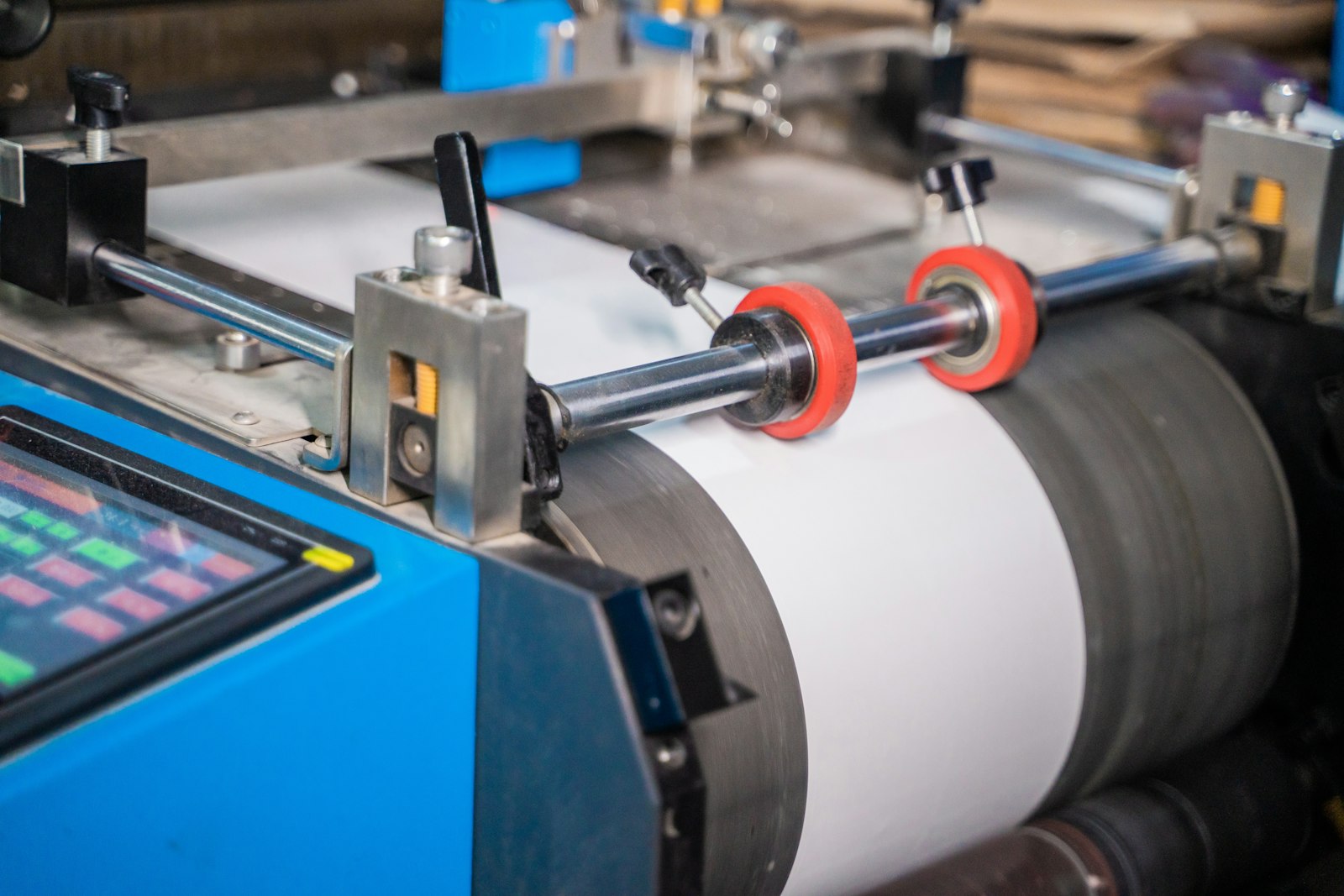
Many line stoppages trace back to the roll, not the film. Splice-free, machine-ready winding means the roll feeds without a join passing through the labeller. Check core size, roll diameter, unwind direction and maximum roll weight against your equipment before the order is confirmed. If your labeller uses hot-melt adhesive, confirm the film and the lacquer are compatible with it, so the label bonds cleanly and stays flat.
A practical checklist before you order
- Confirm film type: transparent, pearlised, white or metallised.
- Agree thickness within the 25 to 40 micron range after a line trial.
- Approve a colour proof and match it to your brand standard.
- Choose gloss or matt lacquer based on brand position.
- Verify food-safe inks and hot-melt compatibility.
- Check roll size, core and unwind direction against your labeller.
- Ask about lead time and repeat-order consistency.
Questions worth asking a supplier
Good suppliers answer technical questions without hesitation. Ask how colour consistency is controlled between batches, how rolls are inspected before dispatch, and what support is available if a trial run shows problems. If your product is bottled water or a soft drink, look at suppliers that already make wrap-around BOPP labels for PET water and beverage bottles, since the film behaviour on PET is what you will depend on every day.
Finally, share your bottle drawing and labelling machine details at the enquiry stage. It saves a round of back-and-forth and helps the supplier recommend the right film and finish from the start.
The takeaway
Good labels come from good decisions made early: film type, thickness, print method, finish and roll format. Test on your own line, approve proofs carefully and keep a record of what worked. Do that, and your labels will look as consistent on the thousandth bottle as on the first.