
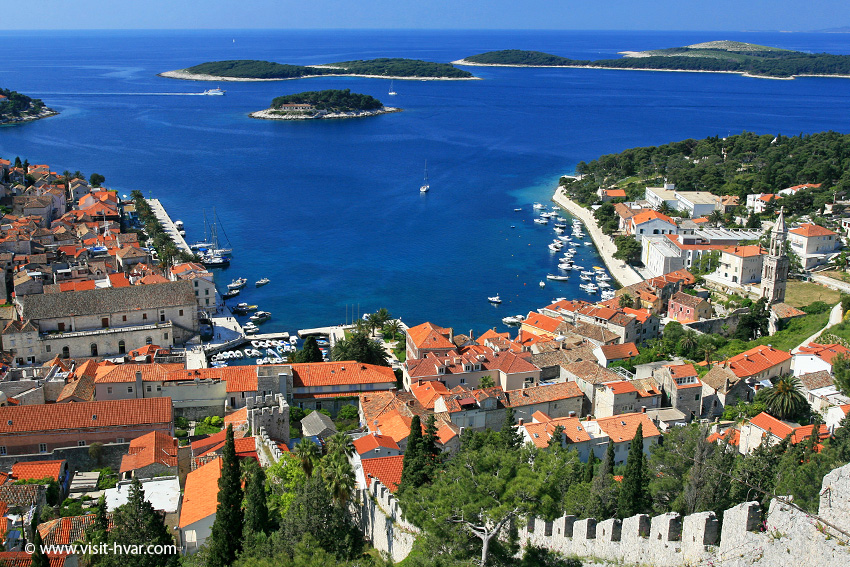
Ask ten Americans what "the Balkans" means and you'll get ten different maps. Some picture Dubrovnik's walls. Some picture the old bridge at Mostar, or the Bay of Kotor, or a lake in Slovenia they saw on Instagram. All of them are right, which is exactly why planning this trip from the US is harder than it looks. There's no single obvious route, and the region rewards people who make a few big decisions early.
Here's how I'd approach it if a friend asked me tomorrow.
Which countries actually belong on a first trip?
For most first-timers, the core is Croatia, Bosnia and Herzegovina, and Montenegro. They sit close together along the Adriatic, the drives between them are mostly two to three hours, and each one feels genuinely different from the last. Slovenia is a lovely northern add-on if you start in Zagreb. Albania and North Macedonia are wonderful too, but they stretch the trip, and I'd save them for a second visit unless you have two full weeks or more.
The mistake I see most is trying to tick off six countries in ten days. You can technically do it. You'll also spend more time at border posts than in old towns. A well-built Balkans tour package usually picks three or four countries and gives each one real time, and I think that's the right instinct.
Where should you fly in and out?
There's no single best airport, so think in pairs. The most useful combination for Americans is flying into one end of the coast and out of the other. Into Split or Zagreb, out of Dubrovnik. Or into Dubrovnik and out of Tivat or Podgorica in Montenegro. A couple of seasonal summer nonstops have run from the New York area into Dubrovnik in recent years; otherwise you'll connect through a hub like Frankfurt, Munich, Vienna or Istanbul.
Booking open-jaw (in one city, out another) on a single ticket is the biggest time-saver available. It means you travel the region once, in one direction, instead of driving half a day back to where you started.
How long do you need?
Ten to fourteen days is comfortable for three or four countries. Under ten, and I'd cut a country rather than cut nights. Here's a shape that works well over eleven or twelve days:
- Split and the central coast, 3 nights
- Mostar, 1 night (stay over; the evening after the day-trippers leave is the best part)
- Sarajevo, 2 nights, if you want the history in depth
- Dubrovnik, 3 nights
- Kotor or Perast, 2 nights
That's a lot of variety for one trip: Roman palace, Ottoman bridge, Austro-Hungarian streets, a medieval walled city and a fjord-like bay, all within a few hundred miles.
When is the best time to go?
Late May, June and September are the sweet spot. The sea is warm enough to swim (low to mid 70s °F), the hiking weather inland is pleasant, and you avoid the July and August crowds that pile into Dubrovnik and Kotor, especially on cruise days. October is lovely and quiet in the south, though some island restaurants start closing.
Mid-summer still works if you book early and plan your sightseeing for mornings and evenings. Midday in August on Dubrovnik's walls is something I wouldn't wish on anyone.
What about borders, money and paperwork?
US passport holders don't need a visa for a normal vacation in any of the main Balkan countries. What changes is everything around that. Croatia and Slovenia are in the EU and the Schengen Area and use the euro. Montenegro also uses the euro but isn't in the EU, so you'll have a proper passport check going in and out. Bosnia and Herzegovina has its own currency, the convertible mark, and its own border crossings.
None of this is difficult. It just adds small bits of friction: a passport line here, a currency swap there, a queue at a crossing that can run long on summer weekends. Carry a little cash in each country for small cafés and parking, and keep your passport handy rather than buried in a suitcase.
Should you drive yourself or travel private?
Within one country, self-drive is fine. Across three, it gets complicated. Rental companies charge extra for cross-border insurance, and dropping a car in a different country can carry a steep one-way fee. Parking near the old towns of Dubrovnik, Kotor and Split is scarce in summer.
That's the case for a private driver. One person handles the whole route, knows which crossing moves faster at which hour, and drops you at each old town gate. Inland stops get easier too: a driver who knows Herzegovina will happily pull over at the Kravica waterfalls or the hill town of Počitelj on the way to Mostar, and most private Bosnia and Herzegovina tours build those detours in rather than racing past them.
Where should you stay?
Inside or right beside the old towns, whenever you can. In Dubrovnik and Kotor especially, being able to walk out of your door before the crowds arrive changes the whole experience. Small boutique hotels and restored stone houses are the sweet spot here; the big resort hotels tend to be a drive away from anything you came to see. Around the Bay of Kotor, the waterfront villages give you calm evenings and easy access, and the Montenegro hotels worth booking tend to fill early for June and September.
A simple planning timeline
Eight to ten months out, choose your countries and your two airports, then buy flights. Five or six months out, lock hotels in Dubrovnik and Kotor first, since they sell out soonest. A month or two before, sort the few things that need a time slot, like a boat day on the bay. In the final week, check your passport validity, grab some euros, and leave a little space in the plan for a long lunch nobody scheduled.
The Balkans aren't a place to rush. Pick fewer countries, stay a little longer in each, and let someone else handle the borders. That's the version Americans come home raving about.